
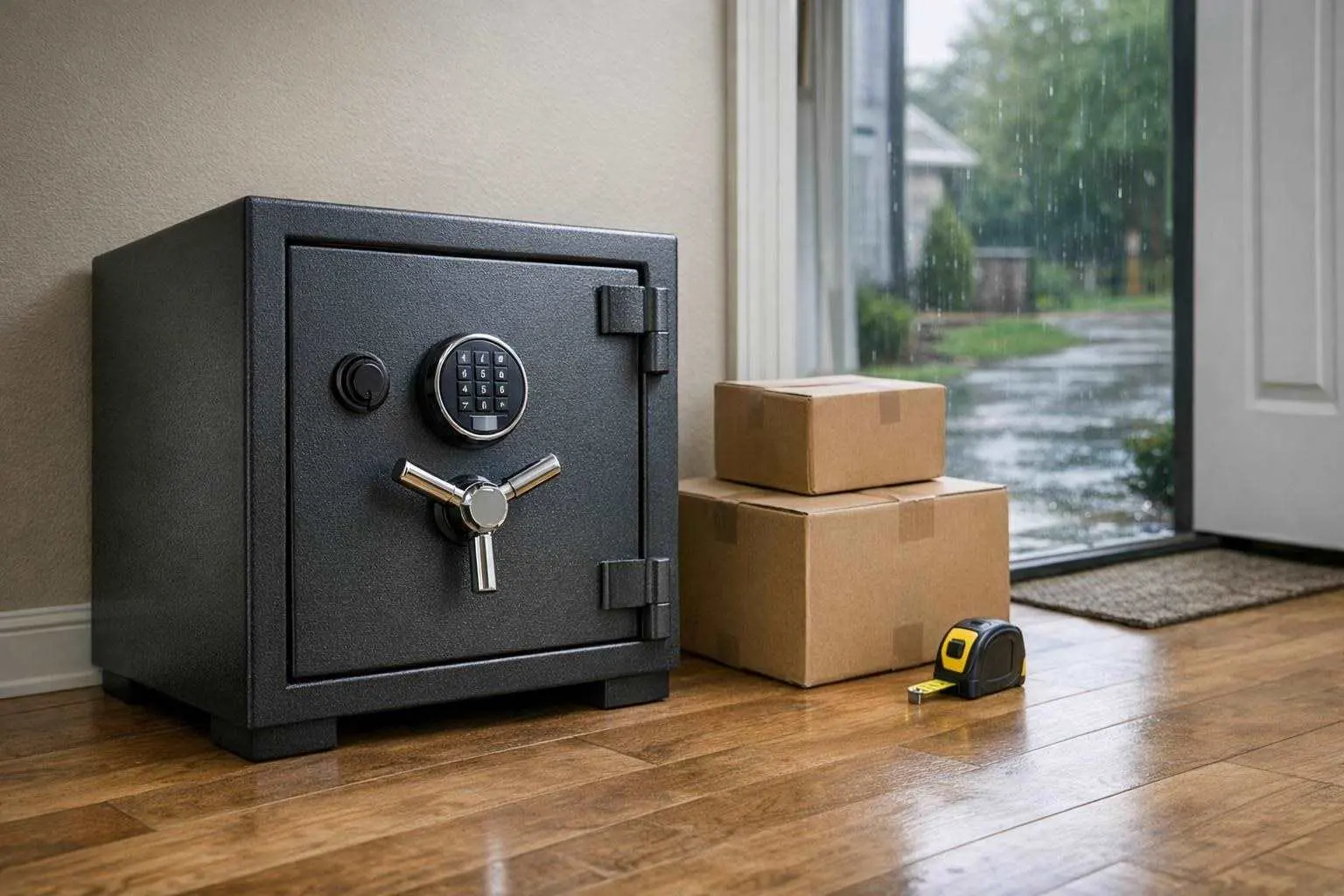
That your storage needs have been exposed by your move to a smaller home is not reason for opting for the smallest storage container on the market. Instead, you need to take the time to consider who has access to your storage needs, how frequently you will need to retrieve your various pieces of equipment and how your new building is going to serve your storage needs. Once you have taken these various considerations into account you will be able to select the storage container that will serve your specific needs.
Start with the new home's actual constraints
Before you buy a safe or lockbox, take the dimensions of the intended storage space and think about where the door will open, how high the ceiling is, if the safe will sit on the baseboard, if there are any shelves that need to be avoided, if there are any power outlets that need to be plugged in, and what the approach will be to bring the safe or lockbox into the space.
Even more important than dimensions is the structure of the space where the storage will reside. A heavy container will require a suitable floor and potentially some type of anchoring point. A lighter lockbox, on the other hand, may be easy to move to a storage location but will provide very little in the way of organized storage. Ask about installation of the various safes and lockboxes and verify compliance with any lease, building or homeowner covenants and restrictions as appropriate.
Match the container to your access routine
This option is better for individuals who shoot occasionally for range trips and need to store an unloaded firearm and related items in a locked container in a area of the home that is used least. This type of individual typically needs more interior organization in the storage container to maintain all of the gear related to each firearm and to keep all of the related items in a single location to keep them out of the way but still easily accessible.
Compact gun safes can fit into smaller spaces and provide a dedicated enclosed storage area for firearms. However, small lockboxes are generally intended for short-term transport of a firearm between a home and another authorized location. Don't mistake a small lockbox for a complete home storage solution. When comparing storage containers, examine the locking mechanism, the container's construction, any recommended anchoring, the organized interior, and how easily it can be accessed by someone other than the owner.
Don't equate smaller with less adequate storage space. Your new home may require less space but also reveal flaws in your previous storage setup. Storage must organize your gear in a manner which facilitates retrieval in a safe and timely manner and enable use and disassembly of gear in preparation for a trip to a range or other destination.
Separate secure storage from quick access
Access to your firearms must be as carefully considered as any other aspect of safe storage. That means having a plan for how people who live with you and visitors will access your firearms. That means locking and unlocking your container every time you store and retrieve a firearm. That means having a plan for who has access to your container's key or combination. That could be as simple as both you and your wife having a key to your gun safe, or it could require more careful consideration.
The location for the keys for the safe(s), combinations, etc. should be determined in advance. No keys should be left in an unlocked motor vehicle or in obvious locations about the home. The list of adults who have access to a firearm and the circumstances under which they may use it should be private and reviewed in the event of a move, a change in the residents of a home, or a lost key.
The requirements and recommendations for the storage of firearms and/or ammunition at a new home can vary significantly by jurisdiction as well as by type of firearm and/or ammunition. Ensure that the storage requirements for the new home are current and applicable.
Organize the interior for fewer handling errors
Storage doesn't have to mean clutter even when space is at a premium. Make sure the firearms are not going to fall, get damaged by other items in storage or get lost under a pile of miscellaneous equipment. Store them in a manner that complies with the manufacturer's safety recommendations for that firearm and keep the ammunition locked up in a safe manner in accordance with all applicable laws and in a responsible manner.
Cleaning supplies, batteries, various cables, etc. should all be stored separate from firearms (and their operational components) and ammunitions. A simple stock list of all various items will assist in locating missing gear quickly without having to search through stacks of various items. Note any identifying features on various items and take a photo or make a note and store it somewhere safe and out of the way.
In finality, be sure to check that nothing is leaning against the gun safe and will fall when the door is closed. Also, check that nothing is blocking the lock or interfering with the safe's ability to close fully. A simple check like this prior to storing your firearm(s) is far better than nothing at all and will assist in developing good habits for securing your firearm(s).
Plan the move before packing begins
Moving with Firearms: Additional Planning Required. It is important to recognize that there are different federal, state, and local laws in addition to carrier rules and regulations that must be followed when moving with firearms. In some cases these laws may be different in jurisdictions to and from which you are moving, and thus must be reviewed prior to the move date.
Move unloaded firearms in their locked cases or containers. Control all keys or codes to said cases or containers. Pack ammunition separately when required by laws or carriers. Avoid storing unloaded firearms in locations where they could be seen or easily retrieved by unknown individuals.
Don't publicize what's in your boxes and don't put your firearms in an obvious location outside of your home. Just because you're moving your firearms as part of your ordinary household goods does not mean that the movers can handle them. Get the most up-to-date information from the relevant state or federal agency, or speak with a firearms attorney to get the current information you need to lawfully transport your firearms.
Avoid the shortcuts that create new risks
So many people fall into the trap of smaller containers which they fill up with even more gear and then they end up damaged, impossible to be opened and/or closed for secure storage. A hidden drawer or closet does not constitute a secure storage location for firearms. It may hide the item but it does not in any way grant control of that item.
The set-up should be checked once the furniture has been delivered to the home as what was secure in the empty room could become blocked, etc. by the furniture of visitors and become insecure. The lock, anchoring, location and access procedure should all be checked.
Don't mistake a new container for a new way to exercise poor gun handling. Remember to keep the gun pointed in a safe direction, to keep the muzzle away from others, and to keep your finger outside the trigger guard until you intend to discharge the gun. Identify whether or not the gun you are putting into storage is in good condition, and go from there. As with anything, fewer assumptions about how to handle things in a small home and more consistent adherence to the routines you have established will make your job of secure storage so much easier.